
Egypt’s Next Operating Layer
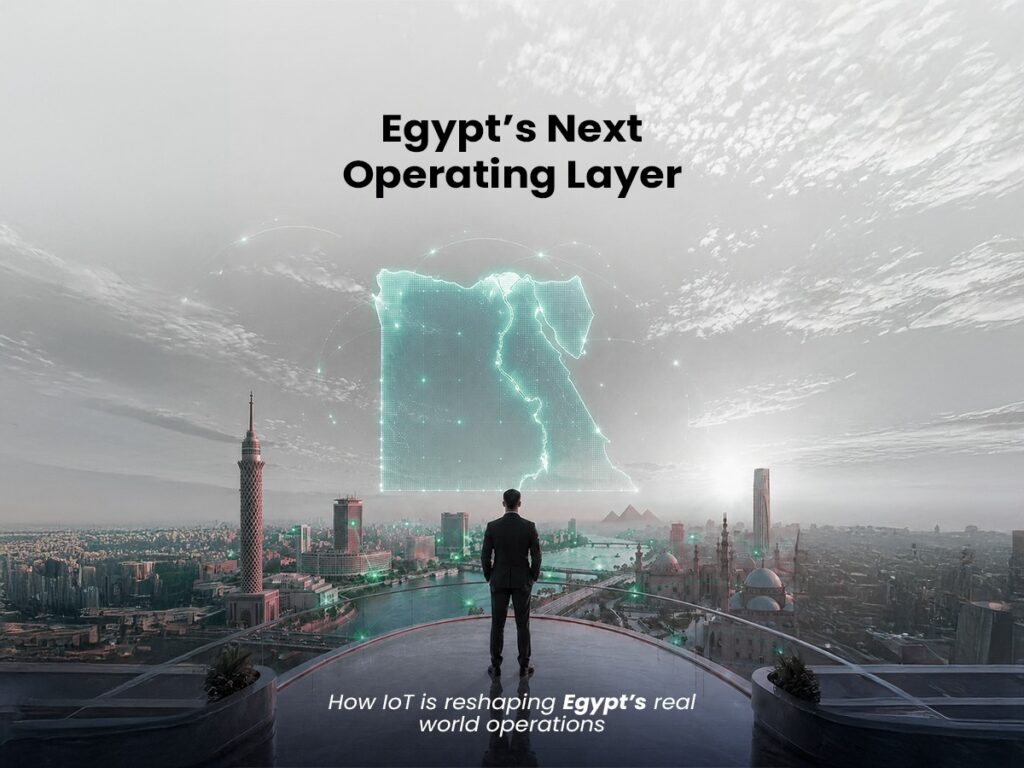
The Internet of Things is no longer only a future concept in Egypt. It is becoming part of how cities, services, infrastructure, and operations are being planned, connected, and managed. As Egypt continues to invest in digital transformation and smart infrastructure, connected systems are gaining a clearer role in the way real environments operate.
At its core, the Internet of Things connects physical assets to digital systems. Sensors, devices, networks, platforms, and control tools work together to collect information from the real world and turn it into usable operational data. This can help decision-makers monitor assets, manage resources, reduce waste, improve safety, and respond faster to changes on the ground.
For Egypt, this is especially important because the country is not only digitizing services. It is also building new cities, modernizing infrastructure, improving transportation, and creating a more organized environment for technology-led operations. This makes the Internet of Things a practical layer that supports better visibility and control across vital sectors.
Where Egypt Is Applying the Internet of Things
1. The New Administrative Capital and Smart Cities
One of the clearest examples is the New Administrative Capital. The project is positioned as Egypt’s first smart city, with advanced infrastructure, integrated services, and a smart city vision that connects urban planning with modern service delivery. This makes it a strong example of how connected technologies can support city management, utilities, citizen services, and day-to-day operations.
The importance of the New Administrative Capital is not only in its scale. It also reflects a wider shift in Egypt’s approach to urban development. Instead of building cities around physical infrastructure only, the direction is moving toward cities that depend on digital platforms, telecom infrastructure, data, monitoring tools, and connected services to operate more efficiently.
2. Smart Homes, Smart Meters, and Transportation
The Ministry of Communications and Information Technology has directly connected the Internet of Things with the operation of smart city systems and digital services such as smart homes, meters, and transportation. These examples show where IoT can move from concept to practical use: homes that can be monitored and automated, meters that can support better utility management, and transportation systems that can become more connected and responsive.
These applications are important because they touch daily life and public services. Smart meters can help track consumption and improve resource planning. Smart homes can support comfort, control, and energy efficiency. Connected transportation can help improve mobility, monitoring, and service management. Together, these examples show how IoT can support both citizens and operators.
3. IoT Services for Smart Vehicles
Egypt has also taken steps toward Internet of Things services for cars. In 2025, the National Telecom Regulatory Authority approved allowing companies specialized in manufacturing smart vehicles to operate IoT services for cars in Egypt. This is an important move because it connects IoT with intelligent transportation, vehicle connectivity, and the future of mobility.
This direction can support services related to vehicle data, safety, maintenance, navigation, and connected transport operations. It also shows that IoT adoption in Egypt is moving beyond buildings and cities into mobility and transport-related ecosystems.
4. Governance and Regulation of IoT Services
A major step in Egypt’s IoT development is the regulatory framework issued by the National Telecom Regulatory Authority. The framework was created to organize IoT services in Egypt, stimulate investment, and ensure service governance. This is important because the Internet of Things cannot grow properly without clear rules for operators, service providers, networks, and end users.
The regulatory framework gives the market a more organized foundation. It helps companies understand how IoT services can be provided, licensed, and governed. This supports safer and more scalable deployment across sectors such as smart cities, infrastructure, utilities, transportation, and industrial operations.
5. Smart City Solutions Through Telecom and Technology Partnerships
Another direct example is the cooperation announced between Telecom Egypt, IoT Misr, and Software AG to provide smart city solutions. The announced services included smart meters, surveillance cameras, automation systems for homes and offices, smart irrigation, access control, smart lighting, smart parking, waste management systems, and other Internet of Things services supported through advanced connectivity.
This example is especially important because it shows how Egypt’s telecom infrastructure, local IoT expertise, and global software capabilities can come together to deliver real IoT services. It also demonstrates that IoT adoption is not limited to one sector. It can serve cities, buildings, utilities, security, mobility, energy, and operations at the same time.
IoT Misr’s Participation in Many Fields
Within this growing national direction, IoT Misr participates as a company focused on turning connected technologies into practical operational solutions. Its role is not only about providing devices. It is about helping organizations connect assets, collect data, monitor conditions, and use technology to improve how real environments are managed.
IoT Misr’s participation can support many fields, including smart cities, buildings, industrial sites, infrastructure, utilities, transportation, security, and operational monitoring. In smart city environments, IoT solutions can help connect lighting, parking, irrigation, meters, access control, cameras, and waste management. In industrial and infrastructure environments, sensors and monitoring systems can help teams track conditions such as temperature, vibration, pressure, energy use, and equipment status.
This kind of participation matters because many organizations do not only need technology. They need visibility. They need to know what is happening across their assets, when something changes, and how to respond before problems grow. IoT Misr can support this shift by helping sectors move from manual follow-up to connected monitoring and more organized operational control.
The partnership with Telecom Egypt and Software AG also strengthens this position. It shows that IoT Misr is part of a broader ecosystem that can support smart city services and connected solutions through telecom infrastructure, software platforms, and practical IoT applications. This gives IoT Misr a relevant role in Egypt’s wider move toward smarter operations.
Finally, Egypt’s adoption of the the Internet of Things is becoming clearer through smart cities, the New Administrative Capital, smart homes, smart meters, transportation, smart vehicles, regulatory development, and technology partnerships. These examples show that IoT is not a distant idea. It is becoming part of how the country plans, manages, and improves real-world operations.
The hope is that this progress continues to support a more efficient, secure, and connected future for Egypt. As more sectors adopt connected systems, Egypt can build stronger infrastructure, better services, and more responsive operations. The future of the Internet of Things in Egypt is not only about connected devices. It is about better governance, smarter management, and stronger decisions for the years ahead.
Stay connected with IoT Misr for more insights into the technologies shaping the future of IoT, smart infrastructure, and secure connected operations.