
How IoT is Transforming Industries in 2026
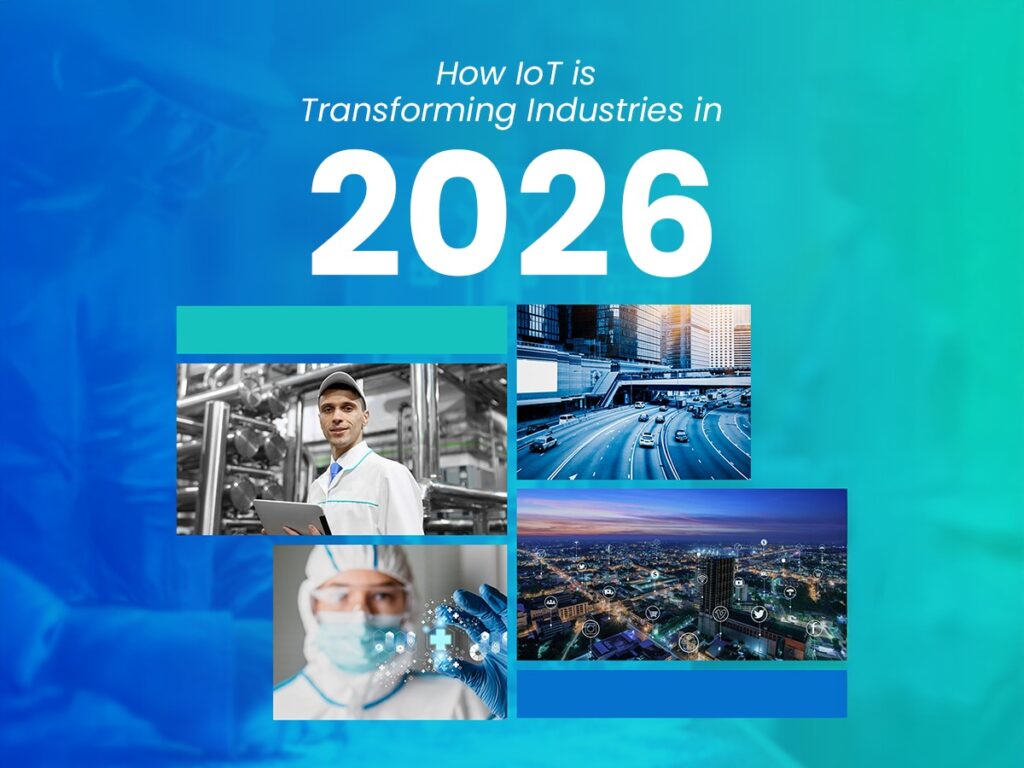
The Internet of Things (IoT) is rapidly changing how businesses operate and grow. By connecting devices, systems, and sensors, organizations can unlock real-time insights, automate operations, and make smarter decisions that drive efficiency and innovation.
At IoT Misr, we see IoT as more than just connected technology. It’s a powerful tool that helps businesses discover new opportunities, optimize performance, reduce costs, and build smarter, more connected environments.
But how is IoT actually transforming industries today? In this article, we explore some of the most impactful IoT use cases that are reshaping industries in 2026.
IoT in Manufacturing: Building Smart Factories
Manufacturing is among the industries experiencing one of the most profound transformations driven by the Internet of Things. By integrating connected sensors and intelligent systems into production environments, manufacturers can gain deeper visibility into their operations and make data-driven decisions in real time.
Through IoT-enabled monitoring, factories can continuously track machine performance, analyze operational data, and detect potential issues before they escalate into costly failures.
One of the most impactful applications is predictive maintenance, where sensors collect and analyze equipment data to identify early warning signs of malfunction. This proactive approach helps manufacturers minimize downtime, extend the lifespan of machinery, and significantly reduce maintenance expenses
In addition, IoT enables real-time production monitoring, allowing manufacturers to optimize workflows, improve operational efficiency, and maintain higher levels of quality control across the entire production process.
IoT in Healthcare: Enabling Smarter Patient Care
Healthcare organizations are increasingly adopting IoT technologies to improve patient care and operational efficiency.
Connected medical devices allow doctors to monitor patients remotely, enabling early detection of health issues and reducing hospital visits.
Hospitals are also using IoT solutions to track medical equipment and manage assets, ensuring that critical devices are always available when needed.
In addition, IoT supports smart medication management systems that help prevent errors and ensure that patients receive the correct treatments on time.
IoT in Smart Cities: Improving Urban Life
Cities around the world are leveraging IoT technologies to create smarter, more sustainable urban environments.
Smart traffic systems use real-time data from sensors and cameras to reduce congestion and optimize traffic flow.
Municipalities are also implementing smart waste management solutions, where sensors detect when waste bins are full and automatically schedule collection routes.
Furthermore, IoT enables intelligent energy management in public infrastructure, helping cities reduce energy consumption and operate more efficiently.
IoT in Retail: Enhancing Customer Experience
Retailers are using IoT to gain deeper insights into customer behavior and improve operational efficiency.
Smart shelves and connected inventory systems allow businesses to monitor stock levels in real time, reducing out-of-stock situations and improving supply chain visibility.
IoT technologies also enable retailers to analyze customer movement inside stores, helping them optimize store layouts and deliver more personalized shopping experiences.
These innovations are transforming retail into a more data-driven and customer-centric industry.
IoT in Transportation and Logistics
The transportation and logistics sector is rapidly adopting IoT to improve fleet management and supply chain visibility.
Connected sensors enable companies to track vehicles, shipments, and cargo conditions in real time.
Fleet operators can analyze driving patterns, monitor fuel consumption, and improve route planning to reduce operational costs.
IoT also plays a critical role in enhancing safety by providing real-time alerts and predictive insights that help prevent accidents and equipment failures.
To conclude, IoT is no longer an emerging technology — it is becoming a fundamental part of modern digital infrastructure.
IoT is helping organizations improve efficiency, gain real-time visibility, and accelerate innovation across their operations.
As the number of connected devices continues to grow, businesses that invest in IoT solutions today will be better positioned to lead to the data-driven economy tomorrow.
At IoT Misr, we help organizations design and implement secure, scalable IoT solutions tailored to their operational needs.
Whether you are looking to build smart infrastructure, optimize industrial operations, or develop connected solutions for your business, our experts are ready to support your digital transformation journey.
Contact IoT Misr today to explore how IoT can unlock new opportunities for your organization.